






Knowing when an aging parent or loved one needs more help can be one of the most difficult decisions a family faces. Often, there isn’t one dramatic event that makes the answer obvious. Instead, changes can happen gradually. An older adult may stop participating in favorite activities, prepare fewer meals, become less socially engaged, or have increasing difficulty managing everyday tasks.
In this episode of Answers for Elders Radio, host Suzanne Newman talks with Lindsay Friedman, Founder and CEO of CareBLOOM and LT Care NAV, and Wendy Harris of CarePatrol of Greater Mobile and Northwest Florida about how families can recognize the signs that an older adult may need additional support.
One of the most important messages from the conversation is that getting help does not necessarily mean giving up independence. In fact, the right support at the right time may help an older adult continue living safely and maintain the ability to make choices about how they want to live.
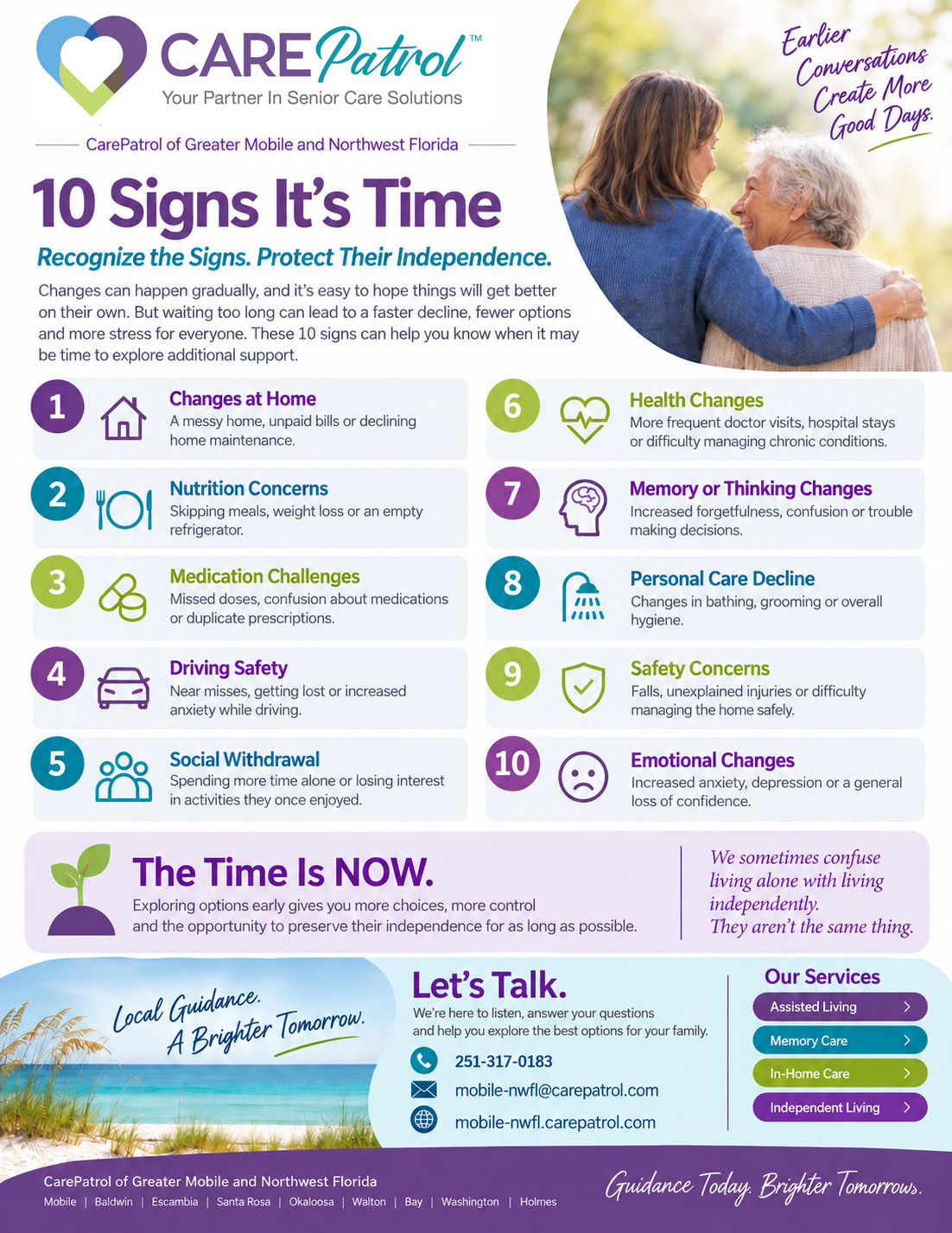
Recognizing the Early Signs an Aging Loved One Needs Help
Wendy Harris describes an important early warning sign as a loved one’s world beginning to get smaller. Perhaps Mom used to meet friends for bridge every month but has stopped going. Maybe Dad once enjoyed preparing meals but is now relying primarily on microwave meals. An older adult who used to take regular walks may gradually stop going outside. These changes can be easy to dismiss individually. After all, everyone has days when they don’t feel like cooking or going out. But when several changes begin occurring together, they can signal that something has changed in an older person’s ability or confidence to manage everyday life.
Social engagement is particularly important. During the conversation, Suzanne and Wendy discuss how social interaction, conversation, and mentally engaging with other people are important parts of maintaining an active life. When an older adult becomes increasingly isolated and spends more time simply watching television, families may want to take a closer look at what is happening.

The goal isn’t to assume that every change means an older person needs assisted living or memory care. Rather, these changes can be an opportunity to begin a conversation and learn what support might make life easier.
Senior Care Warning Signs: Hygiene, Nutrition and Fall Risks
Some signs are more urgent than simply becoming less active socially. Wendy points to problems with basic hygiene, nutrition, and fall risk as situations that deserve particular attention. These issues can indicate that an older adult is having difficulty managing activities of daily living independently.
Fall risks can be particularly difficult for families to recognize because an older person’s home may look perfectly familiar and comfortable to them. Yet everyday tasks may have become much harder. For example, an older adult may still be preparing meals, but that doesn’t necessarily mean the process is safe or manageable. During the episode, the guests discuss how families may need to consider practical questions such as whether someone with physical limitations can safely open the refrigerator, carry food, or move a plate to the microwave.
These seemingly simple activities can reveal a larger issue: Is the person actually able to perform everyday tasks safely?
Looking at the situation this way can help families move beyond the question of whether an older adult is technically “independent” and instead consider whether they are safely functioning in their current environment.
Maintaining Independence Doesn’t Mean Doing Everything Alone
One of the most valuable points in this episode is the distinction between independence and doing everything without assistance. Wendy explains that independence is fundamentally about an individual’s ability to make decisions for themselves and live the life they want to live. Receiving assistance doesn’t automatically take that independence away.
That perspective can be especially important when talking with an aging parent. Many older adults understandably worry that accepting help is the first step toward being forced out of their home. Families may have similar fears. But support can take many forms, and it doesn’t automatically mean moving into a senior living community.
Depending on the individual’s needs, support might include in-home care, physical therapy, occupational therapy, transportation assistance, help with activities of daily living, or simply making changes that improve safety at home. The appropriate solution depends on the person’s circumstances and preferences. The earlier a family begins exploring those possibilities, the more choices everyone may have.
Why Families Should Explore Senior Care Options Before a Crisis
Families often begin searching for senior care when they are already facing an emergency. Perhaps an older parent has fallen, been hospitalized, or is about to be discharged from rehabilitation. At that point, there may be only days to determine what happens next.
Wendy says families should ideally begin educating themselves before they reach that point. When an older adult’s world begins changing, it can be a good time to learn what senior care options exist, how different services work, and how they may be paid for. Early planning also creates an opportunity to have a conversation with the older adult about their wishes.
How would they like to live as they age? What would they want to happen if driving becomes difficult? Would they prefer to receive assistance at home? What kinds of support would make them feel more comfortable? These conversations may not produce an immediate answer, and that’s okay. The objective is to begin understanding the path before circumstances make the choices for you.
This is also where a senior care advisor can be valuable. CarePatrol helps families explore options such as assisted living, memory care, and home care, while providing guidance through what can otherwise feel like an overwhelming process. According to Wendy, the service is provided at no cost to families because CarePatrol works with a network of providers.
Don’t Wait Until You Have to Make a Decision Tomorrow
Perhaps the biggest takeaway from this Answers for Elders conversation is simple: you don’t have to wait for a crisis to start planning. If an aging parent’s world is getting smaller, if meals are changing, if social activities have disappeared, if hygiene or nutrition has become a concern, or if everyday activities are becoming harder or less safe, those changes are worth paying attention to.
That doesn’t necessarily mean it’s time for assisted living. It means it may be time to start asking questions. Learning about senior care options early gives families an opportunity to understand what is available, discuss preferences with their loved ones, and consider ways to provide support while preserving as much independence as possible.
As Suzanne Newman emphasizes throughout Answers for Elders, families don’t have to navigate these decisions alone. Sometimes the first step isn’t making a major decision at all. It’s simply becoming informed.
Watch the Answers for Elders YouTube Episode
10 Warning Signs Your Aging Loved One May Need More Care
Listen to the Answers for Elders Podcast
Frequently Asked Questions About When an Older Adult Needs More Care
What are some early signs that an aging parent may need more support?
Early signs can include withdrawing from social activities, preparing fewer meals, taking fewer walks, or experiencing a noticeable shrinking of their usual world. More urgent signs can include problems with hygiene, nutrition, fall risks, or difficulty safely completing everyday activities.
Does needing help mean an older adult is losing their independence?
Not necessarily. The episode emphasizes that independence is about being able to make decisions and live the life you want. Appropriate support can actually help an older adult maintain independence and remain safely engaged in the activities that matter to them.
Should families wait until there is an emergency before looking for senior care?
No. The guests strongly encourage families to start learning about their options before a hospital or rehabilitation discharge creates an urgent situation. Early planning gives families more time to understand available services and discuss their loved one’s wishes.
What types of support might an older adult receive?
Depending on individual needs, options discussed in the episode include in-home care, assisted living, memory care, physical therapy, occupational therapy, and other forms of support with daily activities. Exploring these choices doesn’t mean a family has already decided that a move is necessary.
When should a family start talking about senior care?
A good time to start is when you begin noticing meaningful changes rather than waiting for a crisis. If an older adult’s routines, social life, nutrition, personal care, mobility, or ability to manage everyday tasks are changing, that can be an opportunity to begin learning about options and talking about future wishes.
The goal isn’t to take away someone’s independence. It’s to understand what support could help them continue living the life they want as safely and comfortably as possible.