






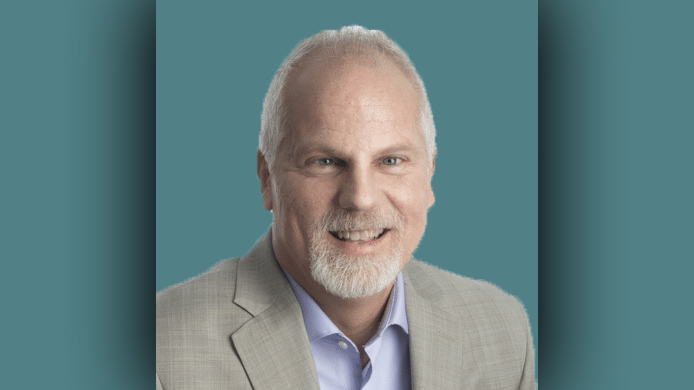
95% of baby boomers have a high goal to stay in their own home and find ways to be safe, or maybe downsize into a smaller place if you’ve got a home that is too big for you. If you are interested yourself, aging in place, or maybe you have a parent that says ‘I am not I am not going to senior living, I want to stay at home as as I age,’ this episode is for you. Kevin Guttman from C2 Financial joins Suzanne Newman on the Answers for Elders podcast to discuss the ins and outs of reverse mortgage. C2 Financial is the third largest mortgage broker in the country and the number one reverse mortgage broker in the country with 1,200 loan officers.
Kevin says, “I think about the first book I wrote, called A Swiss Army Knife for Retirement Cash Flow. And basically what I did is I interviewed my clients and just asked, how has a reverse mortgage helped you? There’s just so many stories of how it’s allowed them to have a better quality of life. And some of the stories, honestly, were heartbreaking, because people were living a substandard existence in retirement because they’re on a fixed income. Inflation has been a real thing in the last few years. Prices have gone up, and then we get small little increases from Social Security that don’t really cover the higher expenses they have.
“And so here’s the struggle. The number one fear a senior has is outliving their money, because baby boomers are healthy, they’re living longer. They have a fixed amount of money. They don’t know how long that’s gonna last. They’re not sure if they’re going to run out of money. So what I tell people is, no, you may never need it, but why not get it and let it just sit there. And if you ever do need it – in fact, there’s a lady and her husband closed today, and that’s exactly what she said. This is just the safety net for us. They may never need it. Well, good for you for planning ahead and being ready just in case life smacks upside the head. Now you need a new roof, or you have a medical thing. Something happens where now you’ve got a chunk of money to access if you need it.”
In part 2, Kevin goes through the math to show how it was better for one family to stay in their home rather than downsizing to an apartment. Kevin says, “I had a couple, probably nine years ago now, and they said, we’re going to sell our house and rent — And I grew up in a real estate home in Southern California. My dad was a realtor and an investor, and he drilled it into my brother and I to buy a house as soon as you can, you’re paying your landlord’s mortgage. — And so I said, let me do the math to see if that’s a good option for you. So I took the average rent in in our city, which I think for a two-bedroom, two-bath apartment was $1,200 dollars at the time. And it increased by 2% a year. They were 62. I did it for 25 years because a financial planner says plan on living 30 years in retirement. But I did 25 years, and then I calculated the depreciation that they would forfeit on the house if they sold it. I use 4% a year. Wow. That number came up to — are you ready? — $1.5 million.
“I said, look, if I were you, it’s not my money. It’s not my house, you do whatever you want, but these are the numbers. You’re forfeiting this amount of equity. You’re paying this amount of rent. You’re giving up control. You’re allowing your landlord to determine what he’s going to fix if he’s going to fix it versus you keeping your home and having access to the equity if you need it. It’s a lot better, a lot more security, a lot more certainty if you stay in your home. You do whatever you want, it’s your home. But I just want you to understand the math behind it.”
In part 3, Kevin explains how the value of your home’s equity can help you age in place in your later years through a reverse mortgage. C2 Financial is the third largest mortgage broker in the country and the number one reverse mortgage broker in the country with 1,200 loan officers.

Kevin says, “Most people have the bulk of their net worth, probably two thirds or more of their net worth, in their home. There are three ways we can get to our equity. We can sell – pay the broker 6 percent – do a cash out refinance or home equity line of credit with a monthly mortgage payment. Or we can do a reverse mortgage, in which we have an optional payment, but have access to the equity.
“So the way it works is, let’s say somebody has a $500,000 home, which is not too uncommon these days. And we’ll just say they’re 62. A spouse can be younger, but at least one needs to be 62. So let’s say they can borrow about 35%. So let me do the math real quick. $500,000 times 35%, $175,000. They don’t need the money, they’re still working, but they know the time value of money. When we were in our twenties, the financial planners told us start investing in your twenties, you need to have time on your side so your money can grow. So if they get it at 62, and they’re planning to work till 70, but now they have this line of credit, $175,000, and they don’t need the money. So they let it ride, so to speak, for ten years. And that line of credit can double in ten years, potentially. So now they don’t have $175, now they have $350, and they can turn that into monthly payments or a lump sum. They still don’t need the money, because they have investments. They’re doing fine and started taking Social Security.
“Now they let it ride another ten years. Now they’re 82, so they’ve had the reverse mortgage for 20 years. And now that line of credit has grown to $700,000. Tax free, monthly payments, or lump sum. Turns out one of them get sick, which is not too uncommon. They need some help. So they bring somebody in a couple hours a day. We’ll just say three or 4 hours a day, Monday through Friday. Instead of having a family member leave their job, come and care for the parents, they have money, they can pay somebody to come and care for them. So they can age in place.”
Kevin adds, “A reverse mortgage is like a fingerprint. It’s unique to each individual, each couple. We can tailor it to help them accomplish what they’re looking to do.”
In part 4, Kevin talks about how to purchase a new home using a reverse mortgage instead of a traditional mortgage loan. He says, “When somebody decides to buy a home, they have three ways they can finance it. Cash. A traditional loan, with a monthly payment. Or a reverse mortgage, where they make one large down payment, we’ll call it 65%. It varies. It depends on their age and different things, but let’s just say 65%. But then they have no more monthly mortgage payment. The mortgage payment’s optional. They can make a payment if they choose to, but they don’t have to.
“So who’s a good candidate for this? Let’s say somebody who’s lived in their home a long time, 20, 30, 40 years. Maybe the neighborhood’s changed. Maybe they don’t feel safe anymore. Maybe they want to live closer to their family, or their doctor. Maybe they can’t do the stairs, or the maintenance on the house is too much.
“I have a great story about this. There was a family that moved back to Colorado Springs from northwest Arkansas, and the husband had to be on oxygen at altitude because we’re 7,000 feet above sea level, and he couldn’t breathe very well. And so his wife leaves the room for a minute while I’m talking with them. And he says, ‘Listen, this is important to me. I need to make sure my wife’s going to be okay. I’m not long for the Earth. I’m sick, I’m dying, and I need to be sure she’s okay.’ So what does that look like? He said, ‘Well, I need the right home, a low maintenance home.’ They ended up buying a condo where they’re just responsible for the inside. ‘We need to put enough down to where she doesn’t have a monthly payment, and I need to be sure it’s in a safe area.’ So the realtor took care of the condo and the location. I helped with the financing. Sure enough, at the time, they only had to put 50% down. This was several years ago, interest rates were half what they are today.
“But four months later, the wife calls and says, ‘I just want to let you know that Bill passed away, and you had told us that we could stay in this home as long as we paid the property taxes and the insurance on time, and not have a monthly mortgage payment. Is that right?’ I said that’s correct. Big sigh of relief. She says, ‘Oh, good. That’s the only way I can afford to stay in my home.’ Why? Because they just lost his income. Their reverse mortgage changed her life.
“This is a game changer for people, If they only understood, ‘Oh, I can finance a home with a first mortgage, I put one large down payment down. I don’t have a monthly mortgage payment. And I’m in a safer home, safer neighborhood, maybe gated community, that kind of thing. Low or no maintenance. It’s amazing.”
- Connect with Kevin Guttman and C2 Financial at 877.251.9729.
- Visit C2 Financial’s website for research, essays, videos, interviews
- Ebook: Betty’s Story: A Prudent Senior Citizen’s Guide to A Reverse Mortgage Loan
Watch on YouTube
Listen on Apple Podcasts