






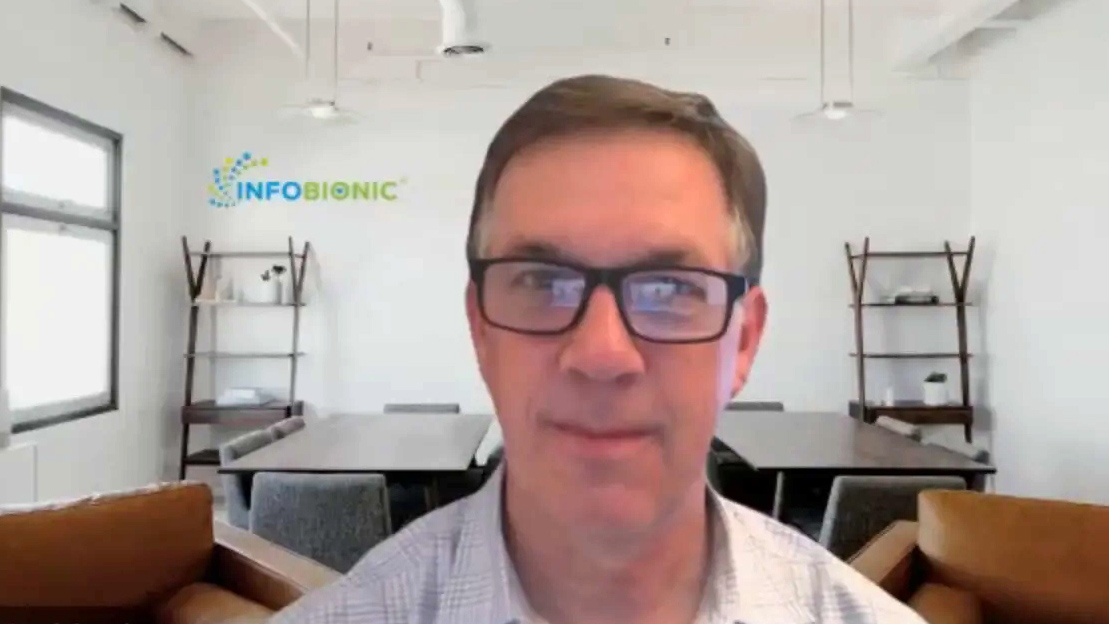
Mark Goddard, Vice President of Clinical Services at InfoBionic.ai, joins Suzanne to talk about how technology is evolving to save lives when it comes to atrial fibrillation, cardiovascular disease, and coronary heart disease.
Mark explains, “Atrial fibrillation causes blood clots to form. And those blood clots can transmit through your body and wind up in your head or your lungs or your heart or your extremities. So atrial fibrillation needs to be well understood. The symptoms need to be discussed, especially with elderly patients who aren’t as necessarily active and may not have the same symptoms as someone who is active would have related to fibrillation. People need to understand the impact and relevance of such an arrhythmia.”
Mark adds, “Artificial intelligence is making a big change. Our first AI algorithm approved by the FDA and we’re going to deploy on our system is one that will tell the medical practitioner whether the heart pumping function is normal or not normal. If the normal amount of blood is being injected out of their heart with every heartbeat, it’ll say, okay, we’re good. If it’s not, it’ll let the practitioner know that things aren’t good, and that’s associated with heart failure. So it’s a great tool that will be able to be used with an EKG that’s a bit of a game changer, and it will be deployed in the next six months.”
On good hearth health practices, Mark adds, “It’ll make a big difference in the way you feel. We always want to feel as good as we possibly can and do as much as we can. Follow the traditional suggestions related to diet, don’t eat foods with lots of preservatives within them.
“Hydration is critical. It’s a whole other subject, because the concentration of what they call electrolytes within your body is critical in maintaining normal heart rhythm. Having electrolytes that are completely out of balance quite often causes arrhythmias that are far more lethal than atrial fibrillation, ones that can create a bad scenario within a few seconds, not a few hours or days.
“Making sure your blood pressure is maintained appropriately, your blood sugar is okay, making sure your lipids are good too. You don’t want anything going on that’s going to change the structure of your heart. And if it does, then you wind up with [the potential for] arrhythmias.”
Learn more about InfoBionic’s AI-enabled MoMe ARC remote heart monitoring device which sends data in near real time to the cloud for review at https://InfoBionic.ai.
Watch on YouTube
Listen on Apple Podcasts